
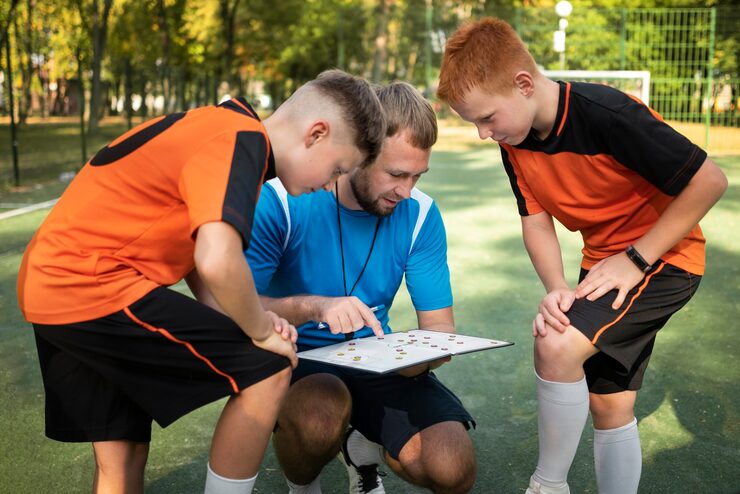

Sports Counter Attack Tips form the backbone of explosive transitions in modern games. Whether in football, basketball, or hockey, the ability to convert defense into attack within seconds defines champions. Fast breaks aren’t about luck—they’re a calculated blend of awareness, positioning, and teamwork.
Think of Real Madrid in their prime or the Golden State Warriors during their title runs. They turned defensive rebounds or interceptions into lightning-fast transitions that left opponents helpless. Every move was rehearsed, every pass precise, every finish clinical. That’s the beauty of counter-attacking mastery—speed married to strategy.
Understanding Sports Counter Attack Tips means learning how to seize the moment, stretch opponents, and maintain composure while moving at top speed. It’s the art of organized chaos—the fine line between control and aggression that makes fast breaks so deadly.
The Core Philosophy of Fast Breaks
At its essence, the fast break is about exploiting space before the opponent can reorganize. The moment possession is regained, the team must switch from defense to attack in a heartbeat.
Coaches emphasize the “three-second rule”—the transition window before defenders recover. Elite teams treat this phase as a tactical weapon. Their Sports Counter Attack Tips focus on anticipation, not reaction. Players are trained to read the flow of play, sense opportunities, and burst forward before defenders even realize the ball has changed hands.
Fast breaks thrive on unpredictability. Whether it’s a long outlet pass, a quick diagonal run, or a one-touch relay, the element of surprise dismantles even the most structured defenses.
Speed Versus Timing: Finding the Right Balance
Speed is critical, but raw pace alone doesn’t guarantee success. Many fast breaks fail because players outrun their teammates or rush decisions. Timing—the coordination of movement, pass, and finish—is what separates elite execution from reckless haste.
In the best Sports Counter Attack Tips, timing is treated like rhythm in music. Every player must move in sync, creating a wave that overwhelms the opponent.
A basketball fast break, for instance, depends on spacing—one player drives the lane, another trails for the pass, and a third spreads wide to stretch defenders. The same principle applies in football: the winger holds width, the striker drags defenders, and the midfielder releases the perfect through ball.
The key? Move fast, but think faster.
Defensive Triggers that Launch Attacks
Every great counterattack begins with defense. Coaches identify “trigger moments”—specific defensive scenarios that spark the transition.
For instance, in football, it could be winning a tackle near midfield or intercepting a risky pass. In basketball, a blocked shot or defensive rebound becomes the launchpad. In both cases, the team must immediately shift gears.
Effective Sports Counter Attack Tips teach players to anticipate these moments. Defenders don’t just clear the ball—they initiate an attack with vision. That’s why center-backs with strong passing range or goalkeepers with long throws are invaluable—they act as catalysts, turning defense into offense within seconds.
The Role of Communication and Awareness
In the frenzy of fast breaks, communication keeps order. Players need to shout directions, signal runs, and stay aware of positioning.
A silent fast break often collapses under confusion. The best teams integrate verbal and non-verbal cues into their Sports Counter Attack Tips. Hand signals, eye contact, and instinctive chemistry all ensure smooth transitions even at full speed.
Awareness also extends to game context. Knowing when to push forward and when to hold back defines maturity. Teams that counter too often risk fatigue and exposure; those that hesitate miss their window. Smart communication keeps the balance intact.
Positioning and Movement Dynamics
Fast breaks rely on geometry as much as speed. Triangles, passing lanes, and off-the-ball runs create options for the ball carrier.
Coaches often drill “lane discipline,” ensuring players occupy specific channels to maximize width and depth. This prevents congestion and keeps defenders guessing.
In football, this means a winger hugging the sideline while a midfielder overlaps. In basketball, it’s about filling lanes across the court. These coordinated runs make counterattacks unstoppable when executed with precision.
The science behind Sports Counter Attack Tips lies in spatial exploitation—knowing how to move defenders without the ball and create the perfect finishing angle.
The Role of the Playmaker in Transition
Every counterattack needs a brain—a player who sees the unfolding play before anyone else.
The playmaker, often a midfielder or point guard, decides when to release the ball and to whom. Their decision-making speed dictates the break’s success.
Incorporating this role into Sports Counter Attack Tips means training playmakers to stay calm under pressure, use peripheral vision, and recognize mismatches. They must balance aggression with control, knowing when to pass early and when to drive forward themselves.
Think of Luka Modrić launching a perfect counter or LeBron James orchestrating a 3-on-2 break—both embody vision fused with composure.
Finishing Under Pressure
A fast break means nothing without a composed finish. Players often arrive in great positions only to misfire due to adrenaline or poor judgment.
The best teams practice finishing under fatigue and pressure. Coaches replicate match conditions—short sprints followed by immediate shots or layups—to train muscle memory.
Sports Counter Attack Tips always emphasize calmness in chaos. The final touch should be clinical, not rushed. Great finishers understand that the goal isn’t always power—it’s precision and placement that seal the deal.
Fitness and Conditioning for Explosive Play
Fast breaks demand extraordinary stamina and acceleration. Players must recover quickly after sprints and repeat these efforts multiple times.
Strength and conditioning programs are built around these demands. Short-burst training, interval sprints, and plyometric exercises develop the explosiveness essential for counterattacking play.
A key aspect of Sports Counter Attack Tips is endurance with purpose—training to sustain energy and mental sharpness deep into the match. Fatigue kills coordination, and without coordination, even the best counter tactics fall apart.
Reading the Opponent’s Weaknesses
Counterattacks exploit space—but knowing where that space will appear requires intelligence.
Coaches analyze opponents’ pressing styles, defensive lines, and transitions to identify vulnerabilities. A team that commits too many players forward becomes a prime target.
Through Sports Counter Attack Tips, players learn to recognize these weaknesses in real-time. A high defensive line invites long passes; a slow full-back becomes a channel for wide attacks. Success depends not just on reaction, but on prediction.
Training Drills for Counter Efficiency
Elite teams dedicate entire sessions to mastering transitions. Drills simulate real scenarios—defensive recovery followed by immediate attacking play.
Players rehearse 3-on-2 and 4-on-3 situations to improve decision-making under pressure. Each repetition sharpens instincts, ensuring that counterattacks become second nature.
Coaches structure these drills to replicate match intensity, embedding Sports Counter Attack Tips into players’ reflexes. It’s repetition, not chance, that breeds consistency.
Maintaining Composure in High-Speed Play
Panic ruins precision. During a fast break, milliseconds matter, but control matters more.
Coaches encourage players to stay relaxed, even during chaos. Breathing techniques and mental focus help maintain clarity while moving at full tilt.
This discipline is crucial to Sports Counter Attack Tips—remaining composed enough to make rational decisions at irrational speeds. The teams that master calm aggression are the ones that thrive in transition.
Role of Coaching and Tactical Preparation
Behind every great counterattacking team is a coach who plans every movement meticulously.
Tactical sessions focus on pattern recognition—when to break, where to run, and how to recover. Video analysis reinforces these lessons by showing how small adjustments lead to big payoffs.
The best coaches design training around predictability and flexibility. Their Sports Counter Attack Tips ensure the team reacts instinctively when opportunities arise, turning defense into offense seamlessly.
Iconic Examples of Counter-Attack Mastery
Some moments in sports history perfectly illustrate fast-break brilliance.
Manchester United’s 2008 goal against Arsenal, where Ronaldo led a breathtaking end-to-end move, remains legendary. In basketball, the Showtime Lakers under Magic Johnson epitomized high-speed execution with grace.
These moments weren’t spontaneous—they were the result of consistent tactical drilling and chemistry built through countless hours of preparation. They embody what Sports Counter Attack Tips aim to achieve: effortless precision born from endless practice.
Evolving the Counter-Attack in Modern Sports
Today’s sports are faster and more data-driven than ever. Counter-attacks have evolved from instinctive bursts into calculated systems.
Analytics identify ideal transition patterns, while GPS tracking ensures optimal spacing and timing. Coaches use real-time data to adjust how players move in transitions.
Yet, the heart of Sports Counter Attack Tips remains the same—quick thinking, teamwork, and courage to seize the moment. Technology only enhances what instinct has always dictated.
Read also:
italy national football team vs france national football team lineups
france national football team vs croatia national football team lineups
argentina national football team vs brazil national football team lineups
brazil national football team vs paraguay national football team timeline
milwaukee bucks vs pacers match player stats
houston rockets vs memphis grizzlies match player stats
phoenix suns vs golden state warriors match player stats