
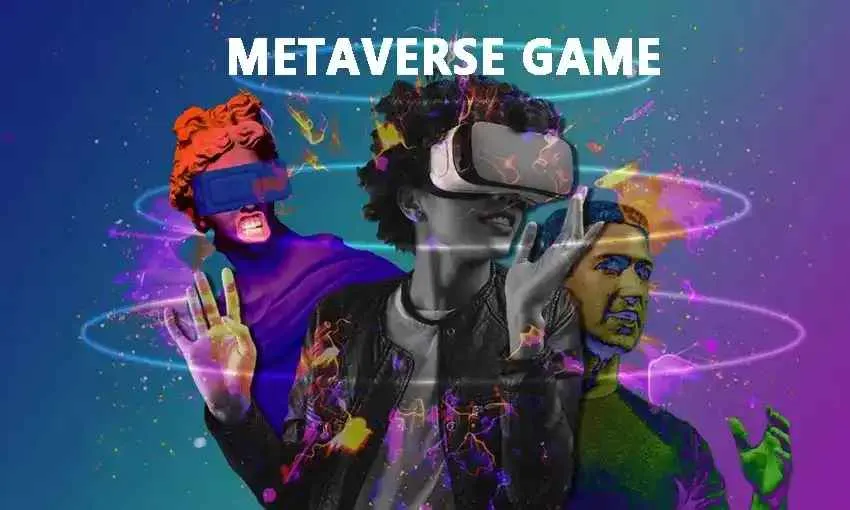

Metaverse Gaming Worlds represent the most significant shift in digital entertainment since the invention of the internet itself, moving us from passive observers behind a screen to active participants in a living, breathing reality. I remember the first time I stepped into a truly persistent digital space; it wasn’t just about high scores or completing a linear quest. It was about the strange, electrifying feeling of “presence”—the sense that I was actually standing next to someone from halfway across the globe, sharing a virtual sunset that felt as real as any I had seen from my own balcony. That moment of connection is the spark that is currently igniting a multi-billion dollar industry that refuses to be categorized simply as “video games.”
For decades, we viewed gaming as a solitary or competitive escape, a way to switch off from the real world for a few hours. However, the rise of modern digital ecosystems has flipped that script entirely. We are no longer escaping reality; we are expanding it. These digital realms are becoming our new town squares, our concert halls, and our marketplaces. The transition from a static game to a persistent world is a technological marvel that relies on the convergence of high-speed connectivity, advanced graphics rendering, and a fundamental shift in how we perceive digital ownership and social interaction.
To understand the sheer scale of this evolution, one must look at how the boundaries between different genres are dissolving. In the past, you played a racing game to race and a shooter to shoot. Today, in the most popular Metaverse Gaming Worlds, you might spend your morning building a digital home, your afternoon attending a live fashion show, and your evening competing in a high-stakes tournament, all within the same seamless environment. This level of versatility is what keeps millions of users coming back day after day, turning a software application into a primary social hub that rivals physical gathering spaces.
The concept of a “world” implies permanence, and that is exactly what separates these platforms from traditional multiplayer games. When you leave a standard game, the world usually resets for the next player. In a metaverse environment, the changes you make are permanent. If you plant a tree or build a structure, it remains there for others to see long after you have logged off. This persistence creates a sense of history and community, allowing for a digital culture to emerge that is unique to each specific realm, complete with its own traditions, slang, and social hierarchies.
Exploring the Social Fabric of Metaverse Gaming Worlds
The true magic of these environments lies in their ability to foster deep, meaningful human connections that transcend physical limitations. For many, the digital avatar is not just a costume but a true expression of their inner self, free from the judgments or constraints of the physical world. I have spoken with creators who felt more “at home” in their digital skin than they ever did in their own hometown. This psychological liberation is a cornerstone of the metaverse experience, allowing individuals to explore different facets of their personality in a safe and supportive environment.
Social presence is the metric by which these worlds are judged. It is the subtle art of making digital interactions feel “weighty.” When you stand in a virtual circle with friends, the way the spatial audio shifts as you move, or the way an avatar’s eyes track your movement, contributes to a profound sense of shared reality. We are seeing a move away from simple text chats toward expressive, gesture-based communication that mimics our natural human behavior. This makes the experience inherently more intuitive and emotionally resonant than any social media feed could ever hope to be.
Trustworthiness in these spaces is built through consistent community management and the development of robust safety tools. As these worlds grow, the responsibility to protect users from harassment and digital fraud becomes paramount. The most successful platforms are those that empower their communities to self-regulate, creating a culture of mutual respect and creative collaboration. By prioritizing user safety and ethical design, developers are ensuring that these digital frontiers remain welcoming to everyone, regardless of their background or technical expertise.
The impact of Metaverse Gaming Worlds on our social lives is perhaps most visible in the rise of virtual events. We have seen millions of people gather for live concerts by global superstars, where the audience is not just watching a video but dancing and interacting with the performer in real-time. These events are not meant to replace physical concerts but to offer a different kind of spectacle—one where the laws of physics can be broken and the scale of the experience is limited only by the imagination of the designers.
The Economic Revolution Within Digital Realms
We are currently witnessing the birth of a genuine digital economy where the value of a virtual item can rival that of a physical luxury good. In many Metaverse Gaming Worlds, users can buy, sell, and trade assets ranging from digital clothing to entire tracts of virtual land. This is not “monopoly money”; this is real economic activity that supports thousands of full-time creators and entrepreneurs. The ability to own a piece of a digital world provides a level of skin in the game that encourages long-term investment and community growth.
The “creator economy” is the lifeblood of this movement. Unlike traditional games where the developers create all the content, the metaverse is built by the people who live in it. Users are given powerful yet accessible tools to design their own experiences, which they can then monetize. This democratization of game design has turned millions of players into developers, leading to an explosion of creativity that no single studio could ever produce. It is a symbiotic relationship where the platform provides the infrastructure and the users provide the soul.
Digital ownership is often facilitated by blockchain technology, which provides a transparent and secure way to track the history of an asset. This ensures that when you buy a rare item, it is truly yours and cannot be duplicated or deleted by a central authority. While the technology is still evolving, its potential to create a fair and open market for digital goods is revolutionary. It allows for “interoperability,” the dream of taking your favorite avatar or sword from one world to another, creating a unified digital identity that travels with you across the entire metaverse.
Experience has shown that the most sustainable digital economies are those that prioritize utility over speculation. When a virtual item has a clear purpose—whether it is an aesthetic upgrade that grants social status or a tool that allows for better creation—its value remains stable. The shift toward “play-and-earn” models, where users are rewarded for their contributions to the world, is creating a new paradigm for how we think about labor and leisure. For some, the metaverse is not just a place to play; it is a place to build a career and a financial future.
Breaking the Technical Barriers to Immersion
The journey toward a fully realized metaverse is a marathon of engineering challenges, requiring us to push the limits of what our hardware can handle. To achieve true immersion, we need latency that is so low it becomes imperceptible to the human brain. When you turn your head in a virtual world, the image must update instantly to prevent motion sickness and maintain the illusion of reality. This requires a massive investment in cloud computing and edge networking, ensuring that the processing power is as close to the user as possible.
Virtual Reality (VR) and Augmented Reality (AR) are the primary windows through which we view these worlds, and the hardware is becoming more comfortable and accessible every year. We are moving away from bulky, tethered headsets toward sleek, standalone devices that feel as natural as a pair of glasses. The goal is to make the technology “invisible,” allowing the user to focus entirely on the experience rather than the equipment. As the resolution increases and the field of view expands, the line between the digital and physical will continue to blur until it eventually disappears.
Artificial Intelligence is another vital component of the Metaverse Gaming Worlds infrastructure. AI is used to populate these realms with intelligent, responsive non-player characters (NPCs) that can hold conversations and adapt to the user’s behavior. This makes the world feel alive even when your friends are offline. Furthermore, AI tools are helping creators to build complex environments and assets in a fraction of the time it used to take, further accelerating the expansion of the digital frontier and ensuring that there is always something new to discover.
The challenge of interoperability remains one of the most significant technical hurdles. For the metaverse to truly flourish, different platforms must be able to communicate and share data seamlessly. This requires a set of open standards and protocols, much like the ones that govern the modern web. A fragmented metaverse of “walled gardens” will always be limited in its potential. The industry is currently in a state of intense collaboration, as competing companies realize that a unified, open digital reality is in everyone’s best interest.
The Psychological Impact of Life as an Avatar
Living a portion of our lives in a digital world has profound implications for our psychology and our sense of self. The “Proteus Effect” is a well-documented phenomenon where an individual’s behavior changes based on the characteristics of their digital avatar. For example, people using taller or more attractive avatars often display more confidence in their social interactions. This suggests that the metaverse can be a powerful tool for personal growth, allowing individuals to “practice” being the person they want to become in the physical world.
However, the immersion offered by Metaverse Gaming Worlds also brings new challenges regarding mental health and digital fatigue. The “always-on” nature of these platforms can make it difficult to disconnect, leading to a sense of exhaustion. It is essential for developers and users to prioritize digital wellness, creating environments that encourage healthy boundaries and meaningful rest. A world that demands your attention 24/7 is not a sanctuary; it is a burden. The future of the metaverse must be one that enhances our lives, not one that consumes them.
The sense of “community belonging” in digital realms can be a lifesaver for individuals who feel isolated in their physical surroundings. For someone living in a remote area or dealing with a physical disability, the metaverse offers a level of social access that was previously impossible. This inclusivity is one of the most beautiful aspects of the digital shift, proving that our need for connection is universal and that technology can be a powerful force for good when designed with empathy and a broad perspective.
As we spend more time in these spaces, the concept of “digital legacy” becomes increasingly important. What happens to our digital assets and our social connections after we are gone? We are starting to see the development of virtual memorials and archives that preserve the history of a person’s digital life. This is a testament to the fact that our time in the metaverse is not “fake” or “meaningless.” It is a real part of our human story, filled with the same laughter, tears, and milestones that define our physical existence.
The Future of Education and Professional Collaboration
Beyond entertainment, the metaverse is poised to revolutionize how we learn and work. Imagine a classroom where students can walk through ancient Rome or explore the inner workings of a human cell in three dimensions. This “experiential learning” is far more effective than reading a textbook or watching a video, as it engages multiple senses and allows for active exploration. The most advanced Metaverse Gaming Worlds are already being used as educational platforms, providing a safe and interactive environment for students of all ages to experiment and discover.
Professional collaboration is also undergoing a radical transformation. Traditional video calls often feel flat and draining, leading to “Zoom fatigue.” In a virtual office, you can sit around a table with your colleagues, see their body language, and interact with three-dimensional models of the products you are building. This sense of shared space fosters creativity and spontaneity, making remote work feel more connected and productive. We are moving toward a world where your “commute” is simply putting on a headset, saving hours of time and reducing our environmental footprint.
The training and simulation potential of these worlds is equally impressive. Surgeons can practice complex procedures, pilots can navigate difficult weather conditions, and emergency responders can coordinate their efforts in a controlled, virtual environment. This “risk-free” training saves lives and reduces costs, allowing professionals to gain valuable experience before they ever step into a high-stakes physical situation. The metaverse is essentially a high-fidelity “gym” for the human mind, where we can sharpen our skills and prepare for the challenges of the future.
The integration of real-world data into these digital environments is creating “digital twins” of our cities and factories. This allows urban planners and engineers to simulate the impact of different decisions before they are implemented in the physical world. By testing how a new building will affect traffic or how a change in energy usage will impact the grid, we can build smarter, more sustainable communities. The metaverse is not just a place to escape reality; it is a tool to improve it.
Creative Frontiers and the Infinite Canvas
The most exciting aspect of the metaverse is its sheer unpredictability. We are standing at the edge of an infinite canvas, and we are only just beginning to see what the world will paint on it. The creative possibilities are truly limitless, as the barriers between different forms of art continue to fall. We are seeing the emergence of “living art,” where the audience can interact with and change the piece in real-time, creating a unique experience for every individual.
In these digital realms, storytelling becomes a collaborative act between the author and the audience. Instead of a linear narrative, we have “emergent storytelling,” where the players’ choices and interactions drive the plot in unexpected directions. This makes the experience inherently more engaging and personal, as the user is no longer just a spectator but a central character in their own adventure. The most popular Metaverse Gaming Worlds are those that provide the players with the agency to shape their own destiny and leave a lasting mark on the world.
Architecture in the metaverse is free from the constraints of gravity and materials, leading to the creation of structures that would be impossible in the physical world. We see floating islands, cities built inside giant crystals, and buildings that change their shape based on the music that is playing. This architectural freedom is inspiring a new generation of designers to think outside the box and challenge our conventional notions of space and form. The metaverse is a playground for the imagination, where the only limit is the scope of our dreams.
As we move forward, the relationship between the physical and digital will become increasingly symbiotic. We will see “phygital” experiences that blend the two worlds, such as digital items that unlock physical rewards or AR overlays that bring digital characters into our physical living rooms. This integration will make our lives more vibrant and interactive, turning the entire world into a giant, playable canvas. The metaverse is not a destination we are traveling to; it is a new layer of reality that we are building together, one pixel and one connection at a time.
The growth of these platforms is driven by a fundamental human desire for exploration and expression. We have always looked toward the horizon and wondered what was on the other side. Today, that horizon is digital, and the worlds we find there are as rich and varied as our own imagination. Whether you are a creator, a competitor, or a casual explorer, there is a place for you in this new frontier. The journey is just beginning, and the possibilities are as vast as the stars in a digital sky.
The next generation of users will grow up with these worlds as a natural part of their daily lives, much like the internet is for us today. They will not distinguish between “online” and “offline” friends; they will simply have friends. They will not see digital ownership as strange; they will see it as essential. This cultural shift will redefine every aspect of our society, from how we govern and trade to how we love and learn. We are the pioneers of this new world, and the choices we make today will shape the digital reality of the future for generations to come.
As the technology continues to mature and the communities continue to grow, the importance of these digital realms will only increase. They are more than just games; they are a reflection of our collective hopes, dreams, and values. By building worlds that are inclusive, creative, and safe, we are creating a digital legacy that we can be proud of. The metaverse is a testament to human ingenuity and the enduring power of connection, and I, for one, can’t wait to see where the journey takes us next.
Every new world started with a single line of code and a vision of what was possible. Today, we have millions of people contributing to that vision, turning the dream of a digital reality into a tangible fact. The scale of this movement is breathtaking, and its impact is only just beginning to be felt. The metaverse is here, and it is waiting for you to step in and make your mark. Whether you are building a skyscraper or simply sitting by a virtual fire with a friend, you are part of the most important creative endeavor in human history.
Read also :-
kivzuhozyabo
hentaitbe
what is xgh4.5.37k35aqwe model number
model number vh54s.5ph6