
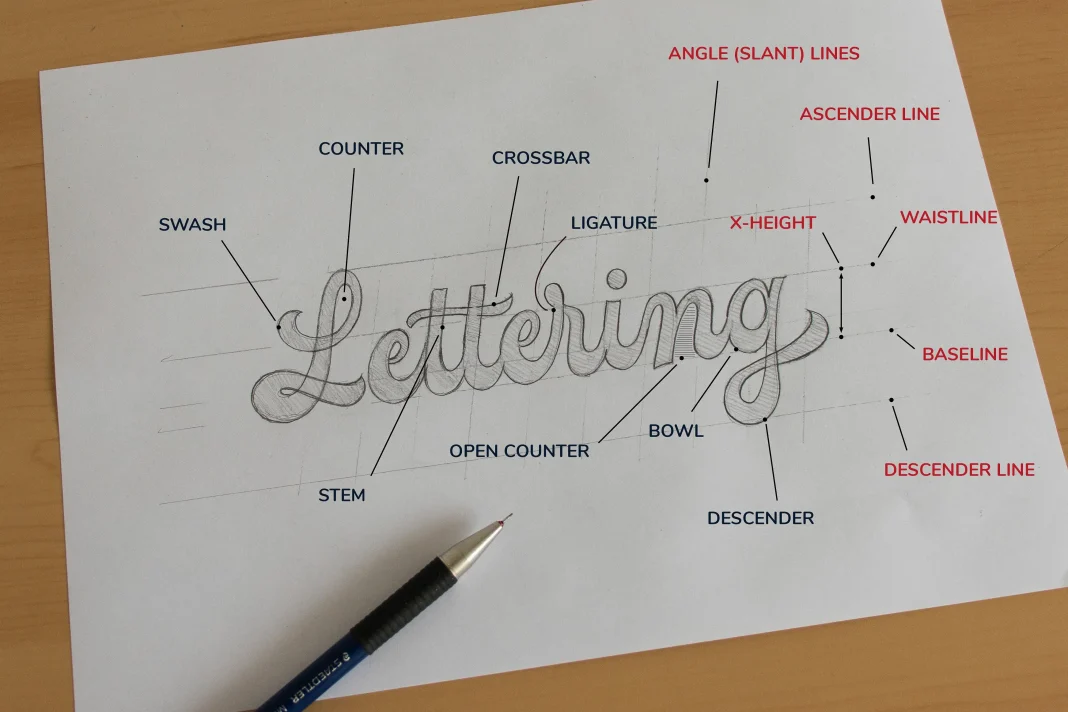

Hand lettering & illustration tips are essential for anyone looking to improve their artistic skills, whether for personal projects, professional design, or creative expression. The combination of lettering and illustration adds personality and style to artwork, making each piece unique.
Take Ananya, a freelance designer, who struggled with making her digital art feel personal. By practicing hand lettering alongside illustration, she created designs that stood out in social media campaigns, client projects, and personal art. Her journey highlights the power of integrating these creative disciplines using hand lettering & illustration tips effectively.
Mastering the Basics of Hand Lettering
Before diving into complex designs, it’s crucial to master the basics. Start with simple strokes, consistent shapes, and understanding letter anatomy. Practicing with pencil and paper allows beginners to refine control and precision.
Rohan, an aspiring illustrator, began each session with foundational exercises. By focusing on uniformity and spacing, he built a strong base for more advanced lettering techniques. Mastering these fundamentals is one of the most important hand lettering & illustration tips for creating polished, professional-looking work.
Choosing the Right Tools
Tools can make a significant difference in how your work develops. Brush pens, fineliners, pencils, and digital tablets each offer unique textures and effects. Selecting the right tool enhances control, precision, and artistic expression.
Priya, who creates greeting cards, found that brush pens worked best for expressive strokes while fine liners added detail to illustrations. Understanding tool capabilities is a critical aspect of hand lettering & illustration tips, allowing artists to select mediums that match their style and desired output.
Combining Lettering with Illustration
Integrating lettering with illustration brings designs to life. Simple flourishes, decorative elements, or illustrative backgrounds enhance text, creating a cohesive and visually appealing piece.
Anita, a freelance calligrapher, often pairs quotes with floral illustrations. These combinations highlight key words and maintain a balanced visual composition. Learning how to combine both disciplines is an advanced yet rewarding aspect of hand lettering & illustration tips, giving work a professional, artistic flair.
Understanding Composition and Layout
Composition is critical for readability and visual appeal. Lettering and illustration should complement each other rather than compete for attention. Understanding hierarchy, spacing, and focal points ensures clarity and engagement.
For instance, Arjun uses composition grids when creating social media posts, placing lettering in areas that naturally guide the viewer’s eye. Proper layout application is a core component of hand lettering & illustration tips, helping artwork feel intentional and balanced.
Color Theory and Shading
Color enhances hand lettering and illustrations, conveying mood, depth, and style. Understanding color theory—complementary hues, contrast, and saturation—helps artists make impactful choices.
Riya, a digital artist, experiments with pastel shades for soft, whimsical designs and bold tones for energetic, eye-catching pieces. Proper application of colors and shading is an essential hand lettering & illustration tips technique that elevates simple sketches into dynamic art.
Practicing Consistency and Flow
Consistency in letter shapes, line thickness, and spacing ensures your work looks professional. Flow refers to the rhythm of your strokes and how letters or illustrations naturally connect, creating smooth transitions.
Meera focuses on repetitive drills to maintain consistent curves and loops. Practicing flow and consistency allows artists to develop muscle memory, which is one of the most practical hand lettering & illustration tips for long-term improvement.
Creating Texture and Depth
Adding texture and depth enhances visual interest in both lettering and illustrations. Techniques like cross-hatching, stippling, and shadowing make designs more dynamic and realistic.
Rohan incorporates subtle shadows behind lettering to make words pop and uses textured backgrounds for illustrations. Learning to layer textures is a valuable hand lettering & illustration tips strategy that elevates artwork beyond flat designs.
Digital vs. Traditional Methods
Both digital and traditional methods have unique advantages. Traditional hand lettering builds foundational skills and muscle memory, while digital tools allow experimentation, easy corrections, and scalable designs.
Ananya uses traditional sketches for rough drafts and then finalizes pieces digitally. Blending these approaches maximizes creativity and efficiency, making it a key part of hand lettering & illustration tips for modern artists.
Storytelling Through Lettering and Illustration
Lettering and illustration are tools for storytelling. Each curve, stroke, and visual element contributes to narrative, emotion, and impact. Practicing storytelling techniques ensures artwork communicates effectively.
Priya combines whimsical lettering with illustrations of everyday life scenes. This approach captures emotion and context, demonstrating how storytelling transforms ordinary designs into memorable works using hand lettering & illustration tips.
Experimenting with Styles
Exploring different styles—modern calligraphy, serif and sans-serif lettering, minimal illustration, or intricate doodles—helps artists discover their unique voice. Experimentation encourages creativity and adaptation across projects.
Arjun frequently switches between bold lettering with minimalist backgrounds and delicate script paired with detailed illustrations. Adapting styles is a critical hand lettering & illustration tips technique that helps artists remain versatile and relevant.
Building a Daily Practice Routine
Consistency is essential for improvement. Dedicate time daily to practice hand lettering strokes, sketch illustrations, or experiment with combinations. Even 15–30 minutes per day can lead to significant progress over time.
Riya schedules short practice sessions, alternating between lettering drills and illustration experiments. Establishing a routine reinforces skill development and ensures steady progress, a foundational principle among hand lettering & illustration tips.
Sharing Work and Seeking Feedback
Sharing artwork online or with peers encourages growth. Constructive feedback highlights strengths and identifies areas for improvement, which is vital for developing proficiency in both lettering and illustration.
Meera posts weekly lettering projects on social media, receiving suggestions from followers and other artists. Engaging with a community is a powerful hand lettering & illustration tips practice that accelerates learning and expands creative horizons.
Hand lettering & illustration tips are essential for artists aiming to enhance their craft, express creativity, and create visually compelling work. From mastering foundational strokes to experimenting with color, texture, and composition, integrating these techniques elevates artwork, making it professional, expressive, and unique.
Read also :-